
First Time Homebuyer in Salt Lake City: Essential Tips for 2026
Becoming a first time homebuyer in Salt Lake City during 2026 means navigating prices, rates, and competition that remain intense but manageable. According to Redfin, median home values in Salt Lake City have generally ranged in the mid-$500,000s through early 2026, with many starter homes trading somewhat below that level in select neighborhoods. Understanding down payments, closing costs, and commuting trade-offs early creates room to move quickly once a realistic property appears, especially in submarkets near Liberty Park, Sugar House, and the University of Utah.
How should a first time homebuyer in Salt Lake City define a realistic 2026 budget?
Establishing a budget starts with income, debt, and expected monthly housing costs. Federal guidelines commonly treat a debt-to-income ratio near 43% as an upper limit for many mortgages, based on standards summarized by the Consumer Financial Protection Bureau. That ratio includes student loans, auto payments, credit cards, and the projected mortgage. Many Salt Lake City renters currently paying between $1,600 and $2,000 per month in areas such as Liberty Wells and Glendale often discover ownership options with payments in a similar range when factoring tax deductions and stable fixed rates.
Down payment planning plays a central role in affordability. According to HUD, FHA loans permit minimum down payments as low as 3.5% for qualified borrowers, which dramatically reduces upfront cash requirements. Conventional loans often favor at least 5% down, with 20% eliminating private mortgage insurance. For a hypothetical starter home priced at $420,000 in Rose Park, that difference equates to roughly $14,700 down with FHA versus $84,000 at a full twenty percent.
Closing costs must also be integrated into any 2026 budget. The Consumer Financial Protection Bureau notes that closing fees typically range from about 2% to 5% of the purchase price, depending on lender charges, title fees, and prepaid taxes or insurance. On a $400,000 purchase in Glendale, closing costs could therefore fall somewhere between $8,000 and $20,000. Some sellers near 700 East and Foothill Drive may agree to cover a portion of these expenses in exchange for a strong purchase price or favorable timing.
Finally, commuting and transportation costs affect real affordability. Living closer to the University of Utah campus, downtown, or the medical centers near 400 South and State Street can reduce car dependence. According to Utah Transit Authority TRAX schedules, many neighborhoods within about 0.5 to 1 mile of TRAX Blue Line and Green Line stations enjoy fast rail access to Salt Lake Central Station. Lower fuel, parking, and maintenance costs can offset slightly higher home prices in these well-connected locations.
Which Salt Lake City neighborhoods fit common first-time buyer priorities?
Neighborhood selection usually reflects a balance between price, commute, and lifestyle. Areas such as Glendale and Rose Park on the city’s west side often offer some of the more approachable entry prices, while still delivering access to the Jordan River Parkway Trail and downtown employment centers roughly 3 to 5 miles away. Sugar House, Liberty Wells, and the 9th and 9th district tend to command higher price points but provide dense amenities, cafes, and quick access to Interstates 80 and 15, which is attractive to many first-time professionals.
School priorities can narrow the search further. According to GreatSchools, East High School near 1300 South and 800 East carries ratings in the upper range for the district, while West High School closer to downtown also posts solid academic indicators. Families often focus on zones feeding into East High, Highland High, or schools near the University of Utah. This leads many first-time buyers to examine parts of The Avenues, Yalecrest, and Sugar House, where price-per-square-foot can exceed less central neighborhoods but offers long-term value stability.
On warm summer evenings around Liberty Park, the scent of food trucks along 700 East drifts through the tall cottonwoods while the chatter of volleyball games echoes from the sand courts. Cyclists glide past Tracy Aviary, and the lake’s surface reflects the pink glow from the Wasatch Range above Foothill Drive. First-time buyers strolling those sidewalks often pause near the corner coffee shops on 900 South, feeling the textured brick facades and imagining daily routines unfolding under the park’s soft canopy.
Downtown and adjacent neighborhoods suit buyers seeking an urban lifestyle. Condominiums near City Creek Center, Gallivan Plaza, and Temple Square offer proximity measured in only a few hundred yards to major employers, the Eccles Theater, and the TRAX Red Line. According to Zillow data for early 2026, central condos often trade in a band from roughly $350,000 to $550,000, depending on size and amenities. Units near Harmons City Creek or along South Temple frequently command modest premiums for walkability.
What mortgage options and assistance programs favor first-time buyers in 2026?
Financing structure can determine whether a first time homebuyer in Salt Lake City succeeds in 2026. FHA loans remain popular among new buyers with limited savings because, as referenced by HUD, they allow minimum down payments of 3.5% and accept credit scores in the mid-600s range at many lenders. Conventional loans backed by Fannie Mae or Freddie Mac often require scores closer to 620 or higher, with pricing improvements for borrowers above the 740 threshold.
Utah-specific assistance programs can further lower entry barriers. According to Utah Housing Corporation, qualifying first-time buyers may access down payment assistance loans that can cover a portion of the required down payment and closing costs, often structured as secondary financing. Income and purchase price limits apply, but many starter homes in Liberty Wells, Rose Park, and sections of Glendale fall within those caps. Combining FHA or conventional financing with such assistance can reduce upfront cash requirements to only a few thousand dollars.
Interest rate structure also matters. Data summarized by the Consumer Financial Protection Bureau indicate that fixed-rate mortgages continue to dominate among first-time buyers, offering predictable payments over 15- or 30-year terms. Adjustable-rate mortgages sometimes start with rates 0.5% to 1% lower than fixed loans, but future payment resets introduce risk. Many first-time buyers in Salt Lake City favor fixed loans, particularly when planning to hold condos or small bungalows near Sugar House Park or along 2100 South for more than five years.
Some households also evaluate whether to stretch for higher-priced properties. A household hypothetically assessing a luxury townhome near The Avenues priced at $1,200,000 or even a $2.4M view home above Capitol Hill must reckon with higher taxes, insurance, and maintenance. According to Tax Foundation estimates, Utah’s effective property tax rate generally falls around the 0.6% to 0.7% range, but larger homes still translate into significantly higher annual carrying costs than modest bungalows in Rose Park or Liberty Wells.
How can a first time homebuyer in Salt Lake City evaluate properties and inspections effectively?
Property evaluation starts with on-site impressions, but data and inspections provide the necessary clarity. According to Redfin, many Salt Lake City listings in early 2026 go under contract within roughly 20 to 35 days, which leaves limited time for repeated visits. Buyers often prioritize a structured checklist focusing on roof age, HVAC systems, plumbing, and windows, especially in older bungalows around 15th and 15th or early-1900s homes in The Avenues, where vintage charm can accompany deferred maintenance.
Walking down 1100 East in Sugar House on a crisp autumn afternoon, traffic hums softly while the smell of roasted coffee drifts from cafes near the intersection with 2100 South. Fallen leaves crunch underfoot along Hidden Hollow’s pathways behind the commercial strip, and the glass storefronts reflect the shifting light from the Wasatch foothills above Hogle Zoo. First-time buyers touring condos above the shops often pause on balconies, feeling the cool metal railings and gauging how daily life might sound during evening rush hour.
Professional inspections reveal issues that visual walkthroughs miss. Industry surveys summarized by National Association of Home Inspectors resources show that common findings include minor electrical defects in more than 50% of inspected homes and roofing concerns in approximately 15% to 20%. In Salt Lake City, inspectors also watch carefully for slope-related drainage issues on properties along Capitol Hill and the east bench, where snowmelt from the foothills above Foothill Drive can channel water toward foundations if grading is inadequate.
Inspection results often become negotiation tools. When reports identify issues such as aging furnaces, undersized electrical panels, or sewer line cracks in Liberty Wells or Rose Park, buyers may request repairs or closing cost credits. According to guidance from the Consumer Financial Protection Bureau, repair requests typically focus on health, safety, or structural items rather than purely cosmetic preferences. Balancing risk, budget, and timeframes helps first-time buyers keep promising contracts intact while still protecting long-term living conditions.
What strategies help first time buyers compete in the 2026 Salt Lake City market?
Competition remains a defining feature of the 2026 housing landscape. According to Redfin, a meaningful share of Salt Lake City homes still receive multiple offers, and some close above list price, particularly in Sugar House, The Avenues, and near the University of Utah. Strong pre-approval letters, flexible closing dates, and earnest money deposits equal to about 1% to 3% of the purchase price often signal commitment. Buyers who enter showings on Liberty Park-adjacent streets or near City Creek Center with documents ready frequently respond faster when an attractive listing appears.
Time management also shapes outcomes. In neighborhoods where days on market hover near the 20-day mark, such as 9th and 9th or parts of Capitol Hill, waiting even 48 hours after a new listing hits UtahRealEstate.com can reduce options. According to Zillow, some competitively priced homes in early 2026 have received accepted offers within the first 5 to 7 days. Scheduling showings quickly and organizing financial documents in advance limits the risk of missing that window.
Offer structure can matter as much as price. Contracts that include reasonable appraisal and inspection contingencies but avoid unnecessary delays frequently appeal to sellers along State Street, Foothill Drive, and in high-demand condo buildings near Temple Square. Data analyzed by the Salt Lake Board of Realtors show that limited inventory in many segments persists, leading to occasional escalation clauses and backup offers. Nonetheless, clearly defined walk-away points protect first-time buyers from overextending budgets, especially when bidding on older properties that may require additional capital improvements within the first 3 to 5 years.
The 3.5% minimum FHA down payment cited at the start of this guide reflects how even modest savings can open doors for a first time homebuyer in Salt Lake City during 2026. That same 3.5% figure from the opening underscores how crucial structured planning becomes in a market where entry-level homes still attract multiple bidders. The UtahRealEstate.com regional listing service provides detailed, real-time data about new inventory, price changes, and pending transactions across every Salt Lake City neighborhood. Buyers who register listing alerts there and commit to touring promising homes within 24 to 48 hours of activation before the late-spring surge in May typically secure contracts sooner, while those delaying tours until after that seasonal upswing often confront fewer choices, stronger competition, and higher final prices.
FROM OUR BLOG
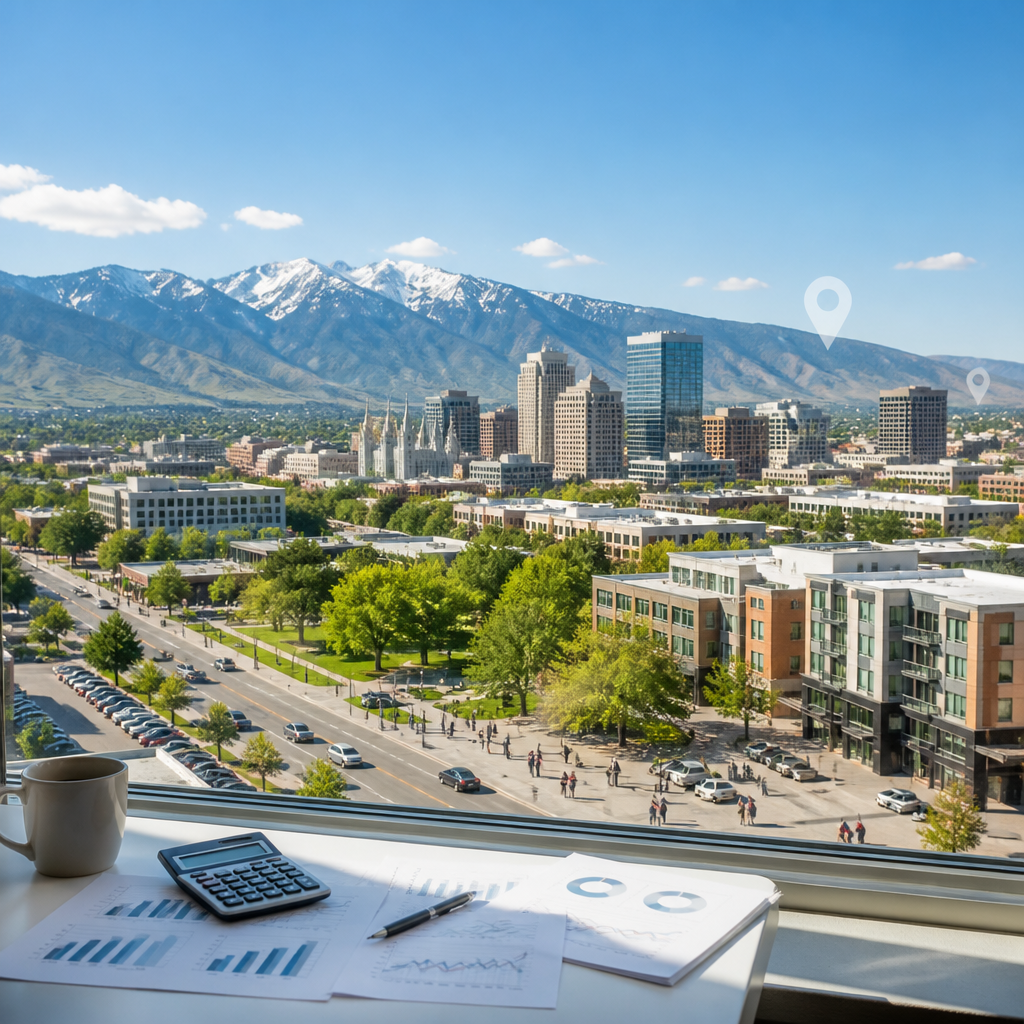
Moving to Salt Lake City UT: What You Need to Know in 2026
Moving to Salt Lake City UT: What You Need to Know in 2026 Moving to Salt Lake City UT in 2026 means entering a metro that surpassed 1.2 million residents as of 2023, according to U.S. Census Bureau QuickFacts. The city combines Wasatch Front scenery with growing job centers around the University of
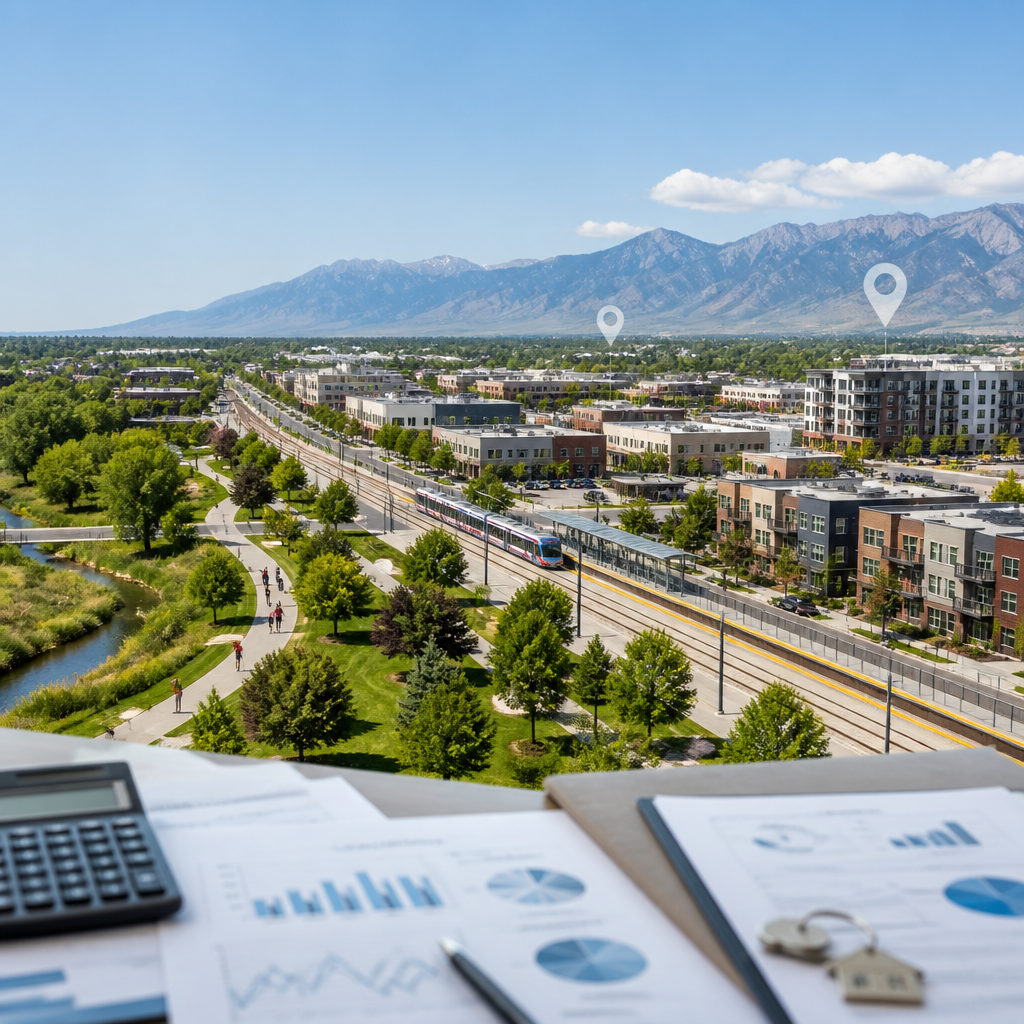
Unlocking Creative Deals in Midvale: A 2026 Guide for Buyers
Unlocking Creative Deals in Midvale: A 2026 Guide for Buyers Midvale sits at the geographic center of Salt Lake County, and that location continues to attract both residential and commercial investors. According to Redfin, Midvale home values have climbed in the range of 4% to 6% annually through ea